


We Fix Boston's Sewers
We inspect, clean and line damaged sewer pipes when lining is suitable for the pipe.We inspect, clean and line damaged sewer pipes. When the pipe is suitable for lining, we install a new liner inside it to reduce the excavation needed for repair.
We repair sewers from the inside.


We clean your old sewer pipe, then install a cured-in-place pipe (CIPP) liner, a resin-saturated tube that we cure inside it. The cured liner becomes a new pipe wall along the measured run, and we install it through a cleanout or one planned opening.

Featured job
We renewed a Charlestown sewer from inside the home.
When the joints in your cast iron or clay sewer fail, roots get in or scale narrows it, we can repair it from the inside instead of opening your floor along its whole route. Lining needs a pipe that still holds its shape, and our camera recording shows us whether yours does.
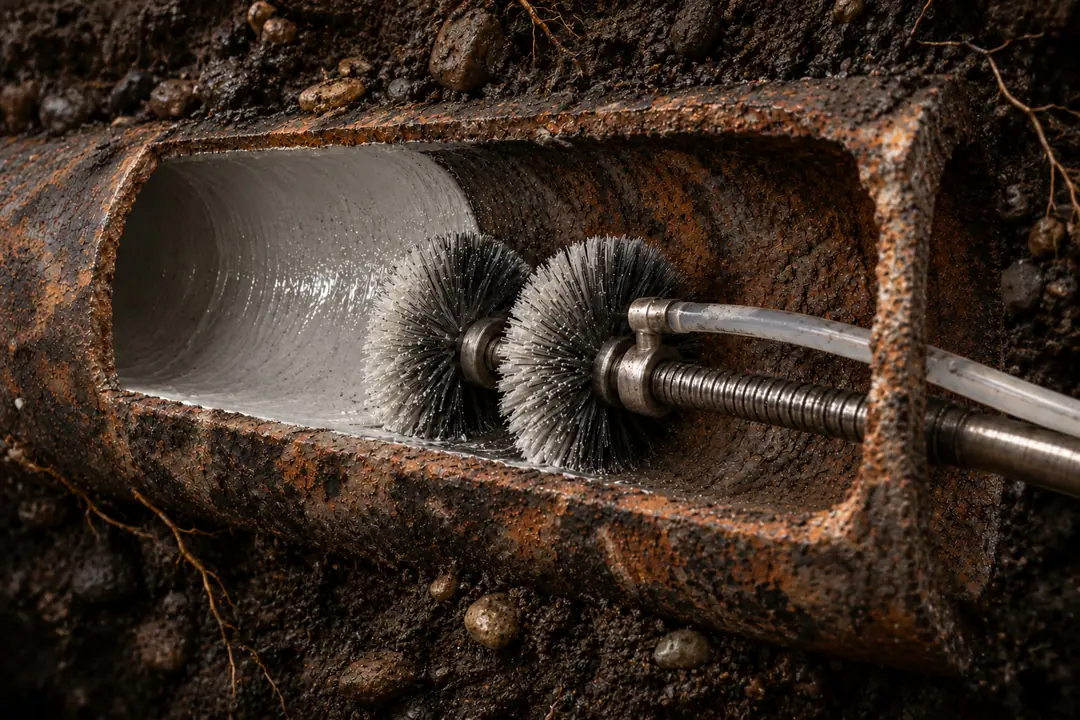
We clean and inspect your sewer line, then install a cured-in-place pipe (CIPP) liner or apply an epoxy brush coating where your pipe and its access allow. We work through a cleanout or a controlled opening in your floor, so we can renew a long section of your sewer without tearing up its whole route.
What our camera found. We found heavy scale, cracking at the hub and infiltration along a 4-inch line that transitions to a 6-inch main beneath a finished basement. The owner had repeated backups.
What we did. We hydro jetted and descaled the Charlestown pipe, then inverted one liner from an interior cleanout, sized to bridge the change in pipe size.
What it meant. We completed the repair indoors from the basement access, without excavating along its route under the finished floor.
Read what our customers wrote about us on Google.
Our customers rate us 5.0 out of 5 from 56 Google reviews.
We had original 100 y/o cast iron under our basement slab and Boston Pipe Lining handled the stretch from the house to the street. It was 12 feet underground which would have been astronomically expensive to dig. The price was fair and they were extremely professional. Travis and his team were in and out in less than three hours and there was not a single issue with the process. I'd strongly recommend them.
Richard R.Google review, Ongoing root issues in our sewer line! Travis and crew came out- on time, were quick, and cleaned up. He shows you (and emails) the video feed from the finished work. NO complaints. Highly recommend.
Heidi G.Google review, Boston Pipe Lining did a great job installing a liner in our sewer lateral out to the street. Professional, prompt, and communicated well. We would highly recommend them.
Mark W.Google review, I had a great experience with Boston Pipe Lining from quote to execution. Travis was a great communicator. He was flexible when we had to change the date of service. I am pleased with the outcome.
Katelyn T.Google review, The whole operation from start to finish was professional and easy to deal with. They came out quickly, quoted me a good price and got the job done on time and under budget. They explained everything to me and assisted me with the Boston Water and Sewer rebate program.
Francis S.Google review, We had a long, drawn out problem involving 8 other neighbors on a 100+ yr old shared sewer line, and a complex root & damaged pipe to deal with. Travis and his team diagnosed the problem, fixed multiple ancillary issues, eventually lining the pipe to solve them. Worked closely with me as I negotiated amongst multiple neighbors, was very responsive, helpful, and incredibly efficient when the time came to do the work. Walked through every step, documented everything meticulously for me & my neighbors, and was always very pleasant & professional to work with. I can highly recommend Travis and his team for your sewer project, and I would use them again anytime on other locations as needed.
Jim M.Google review,
We fix your sewer in four ways.
We inspect your sewer line to see the problem, clean it so its pipe wall is ready, then line or coat the section that needs repair.
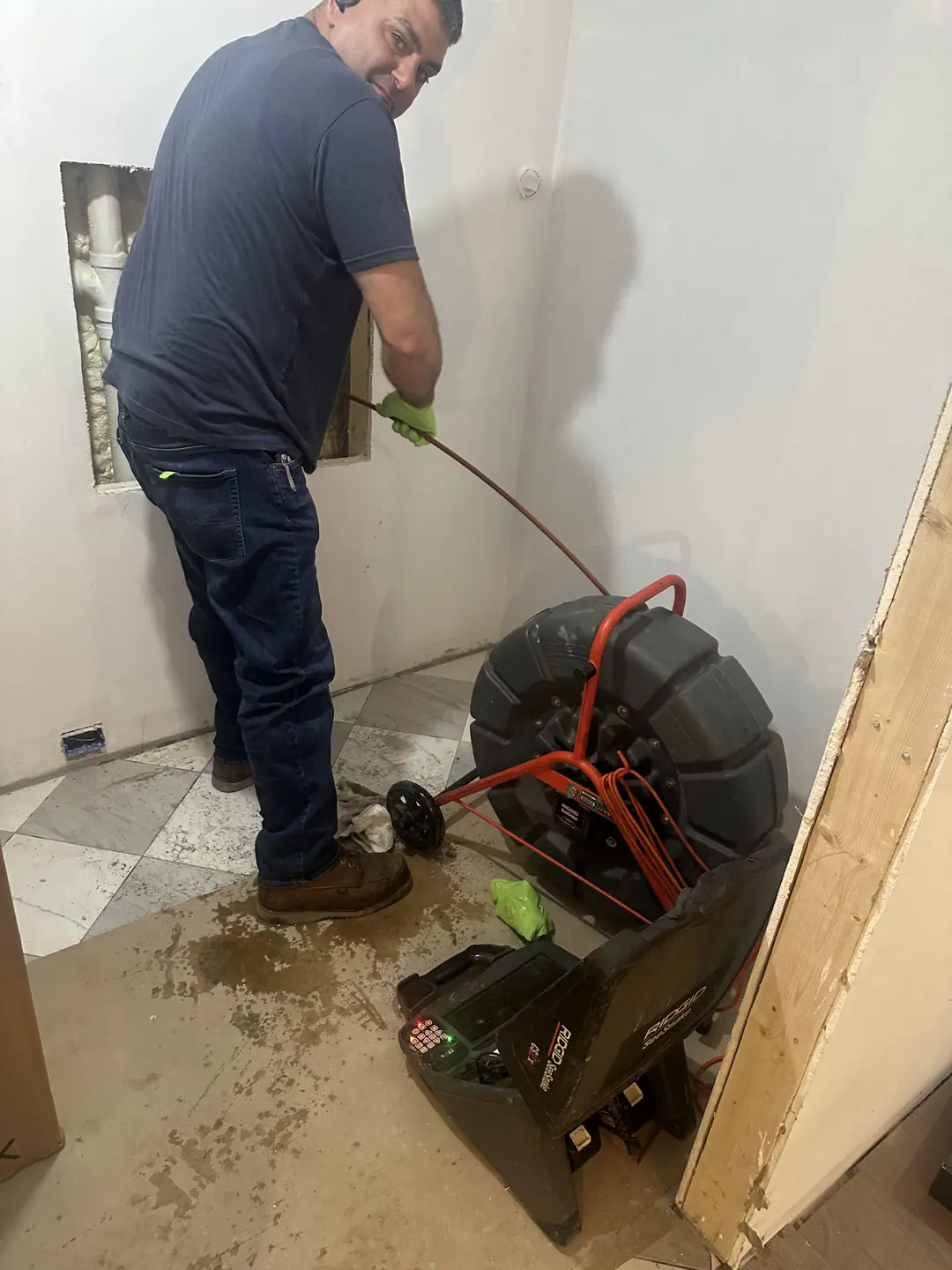
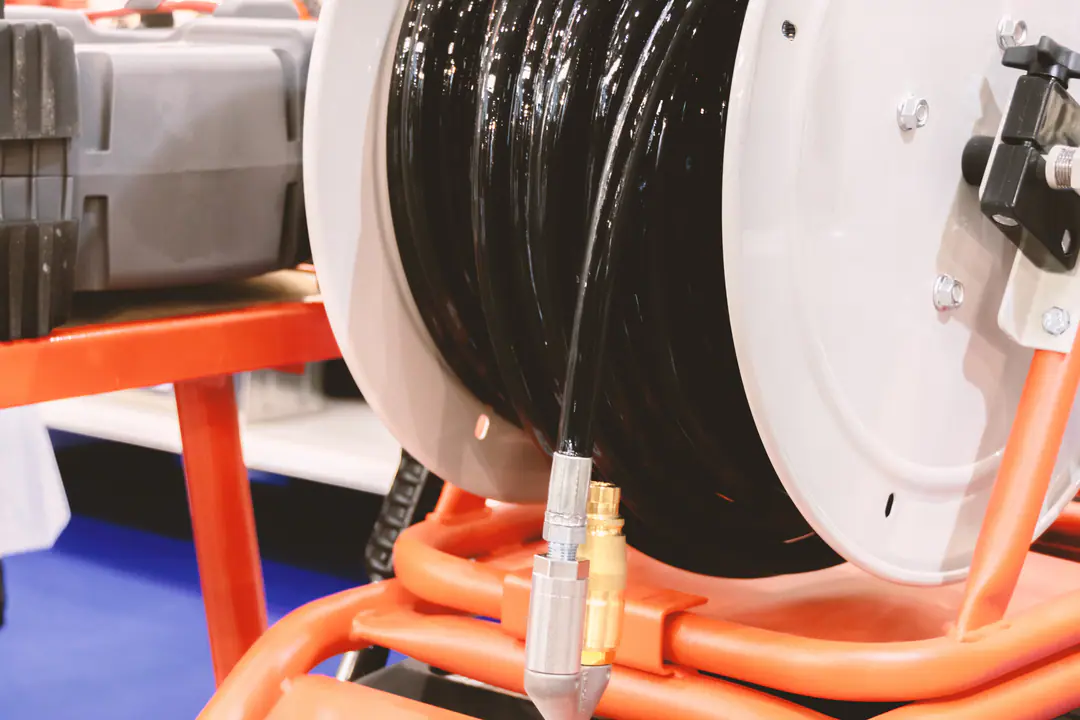
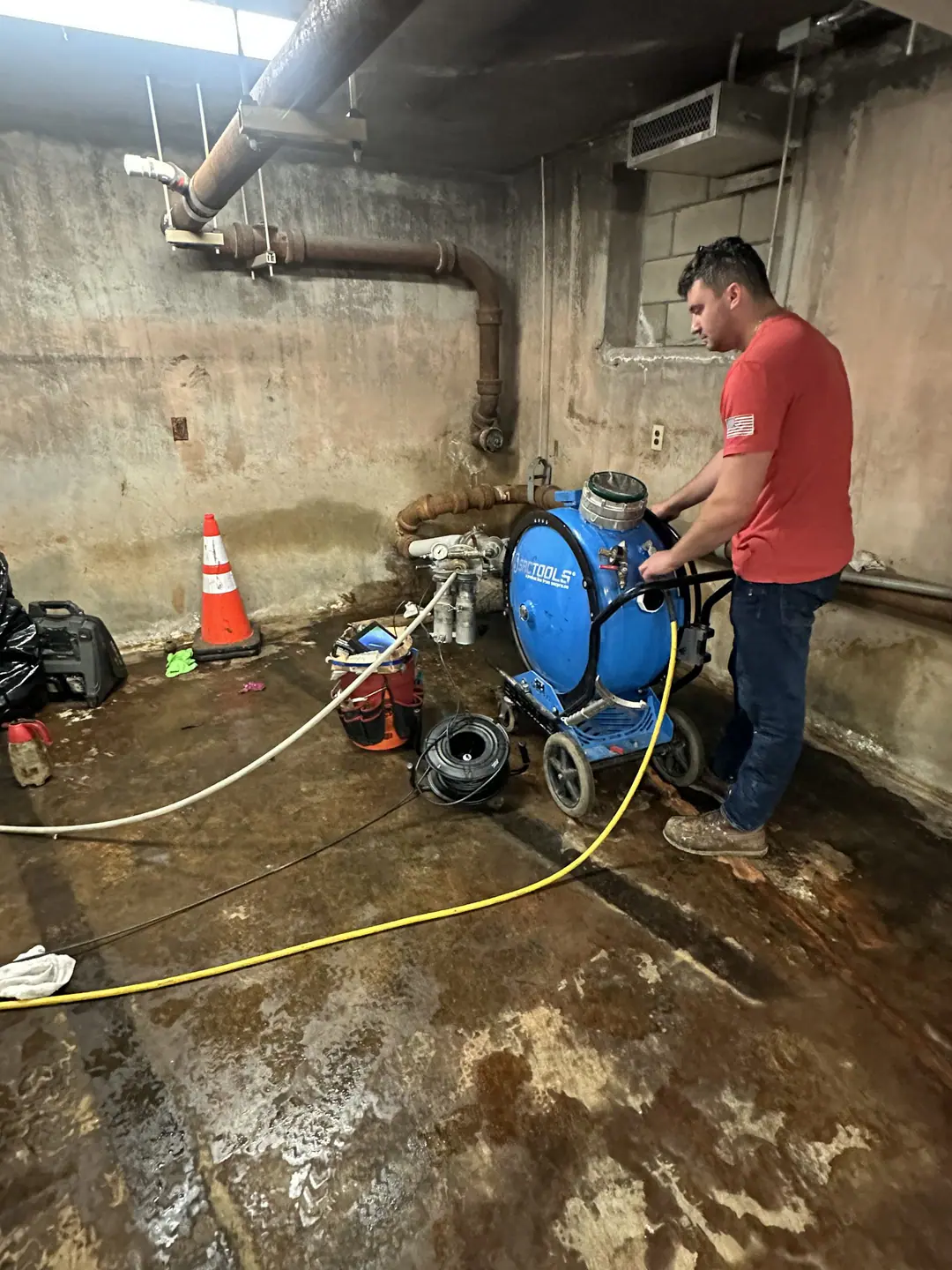


Footage from our jobs
Watch us set up a lining job and run our camera.
These clips come from our own jobs, and we first published them with the project articles they link to. Each one plays without sound while it is on screen, and you can pause it at any time.
We walk from our service vans past the inspection and lining equipment to the basement window where our hose enters the house. We published this clip with our Back Bay project article.
A camera inspection from the street
Our camera goes down through a street sewer access, and the live picture plays on the monitor inside our inspection van. We published this clip with our Dorchester project article.
We move from your call to a lined sewer in four steps.
You tell us what your sewer is doing.
Tell us which fixtures back up, when they back up and where your property is. Send any inspection video you already have.
We inspect and clean your sewer line.
We record your sewer line and clean out deposits or roots, so we plan your liner from what is actually inside your pipe.
We install and cure your liner.
We install a resin-saturated liner along the measured run of your sewer and cure it into a new pipe wall.
We check your sewer and return your fixtures to use.
We confirm your lined sewer is open, reinstate its connections and tell you when your fixtures can be used again.
We have lined sewers across Boston.
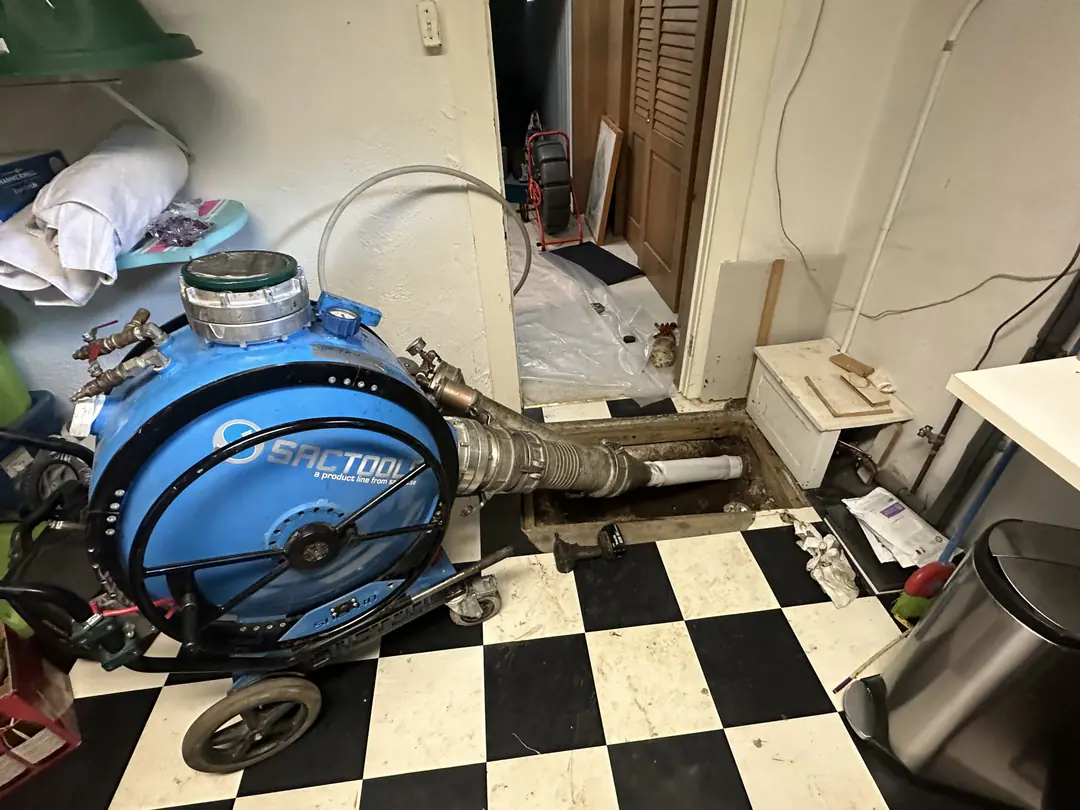
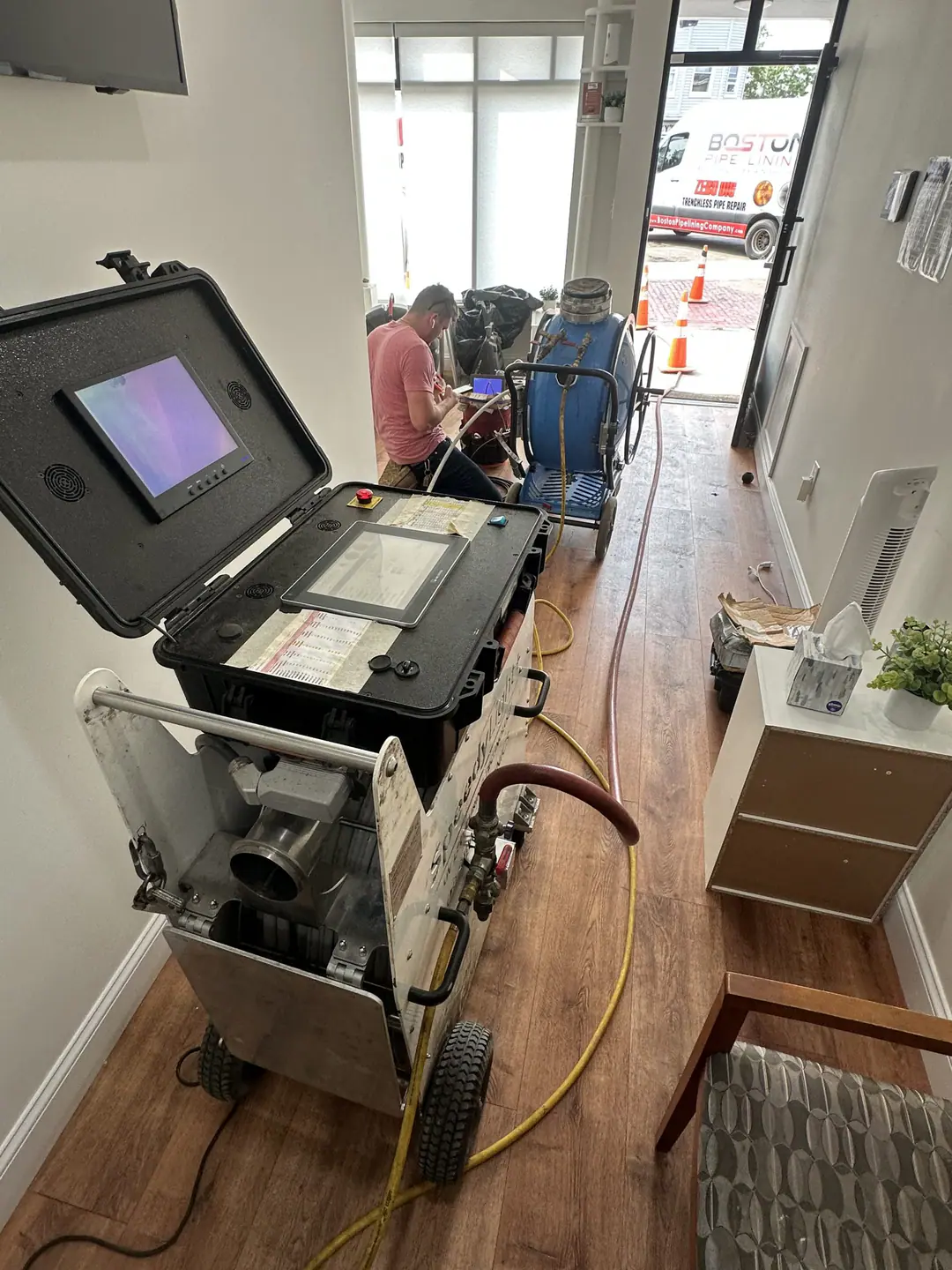
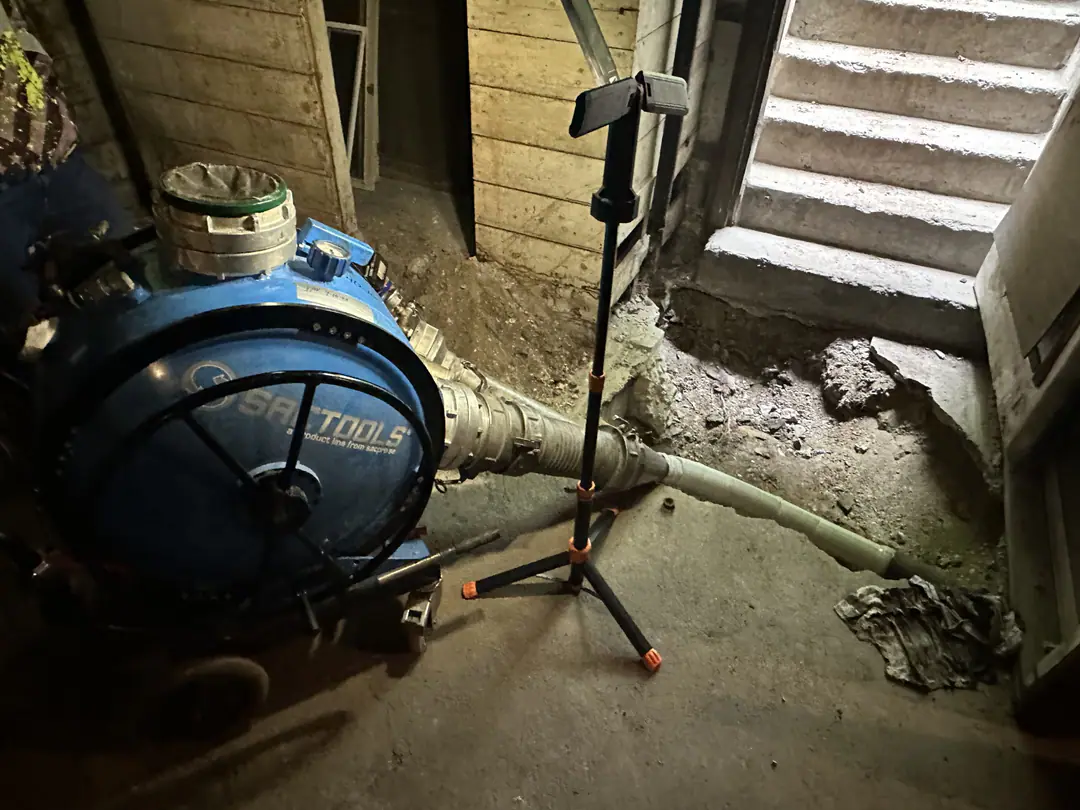


We clean, line or coat your sewer depending on what our camera finds.
Cleaning removes what is inside your sewer line. Lining repairs the pipe itself. If your backups return soon after cleaning, our camera recording can show the cracked joint or root entry behind them.
An epoxy coating seals the inside surface of your drain when it still has its strength. A CIPP liner forms a new structural pipe inside your cracked or corroded sewer.

We work with homeowners, property managers and commercial owners.
If you own a home, we repair the sewer lateral under your finished floor when backups keep returning in your basement bath or kitchen line. If you manage a building, we plan the repair of your shared building drain around your tenants and your operations.
In both cases we answer the same questions with you before work begins: where we can reach your sewer line, what our camera shows inside it, and whether your pipe still has enough structure to accept a liner or coating.
We serve properties from Boston to the South Shore.
We inspect, clean and repair the drain and sewer lines that serve your property in these neighborhoods and towns.
- Boston sewer repairRead how we renewed sewers in Charlestown, South Boston, Back Bay and Jamaica Plain.
- Dorchester sewer repairRead how we lined a clay sewer beneath a Dorchester basement slab.
- Roxbury sewer repairRead how we coat your drain branches and line your main sewer.
- West Roxbury sewer repairSend us the camera recording you already have of your sewer.
- Milton sewer repairRead what our camera shows inside your sewer and where its view ends.
- Quincy sewer repairRead how we line your sewer beneath a finished floor.
- Braintree sewer repairRead how we tell a recurring clog from a damaged pipe.
- Randolph sewer repairRead how we plan your access point and measure your sewer.
- Weymouth sewer repairRead how we sequence your inspection, cleaning and lining.
- Hingham sewer repairCompare lining your sewer with replacing it.
- Cohasset sewer repairRead how one access opening differs from trenching your whole sewer.
- Scituate sewer repairRead how we judge the cracks and joints in your sewer for a liner.
- Norwell sewer repairCompare ongoing cleaning with lining your sewer.
- Rockland sewer repairRead why we clean and measure your sewer before we line it.
- Marshfield sewer repairRead how we plan your fixtures around installation and cure.
We answer your questions about access, preparation and excavation.
How much of my floor or yard needs to be opened?
Lining can avoid a trench along the whole route of your sewer. We still need access to your pipe for inspection, cleaning and installation, so we use your existing openings where practical and plan a new opening where we need one. We settle that access plan with you as part of choosing your repair.
What should I send before you visit?
Send your address, a short description of what your sewer is doing and any sewer camera video you already have. Photos of where your cleanouts are also help us plan access.
When does my sewer still need excavation?
If your pipe has collapsed, has severely offset joints or has no reachable access, we may need a spot excavation or another repair path. Our camera recording guides that decision.