
Our services
Trenchless pipe lining (CIPP)
We renew your damaged sewer from the inside with cured-in-place pipe (CIPP) lining. Our resin-saturated liner cures into a new pipe wall inside your existing sewer, which reduces the need to excavate along its full route.


Our liner forms a new wall inside your sewer.
Cured-in-place pipe (CIPP) lining creates a continuous new wall inside your existing pipe. The cured tube covers the joints and cracks along the lined run, which can improve flow and reduce leakage at connections when we design the liner for your pipe size and layout.
Your old pipe stays in place around the new liner, so we renew your sewer without removing it.
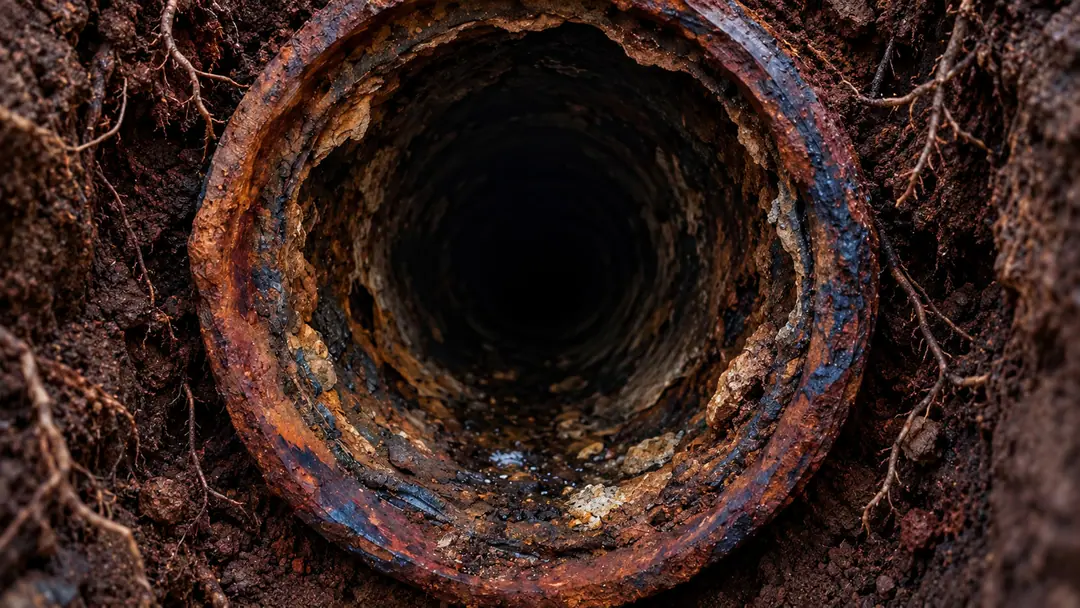
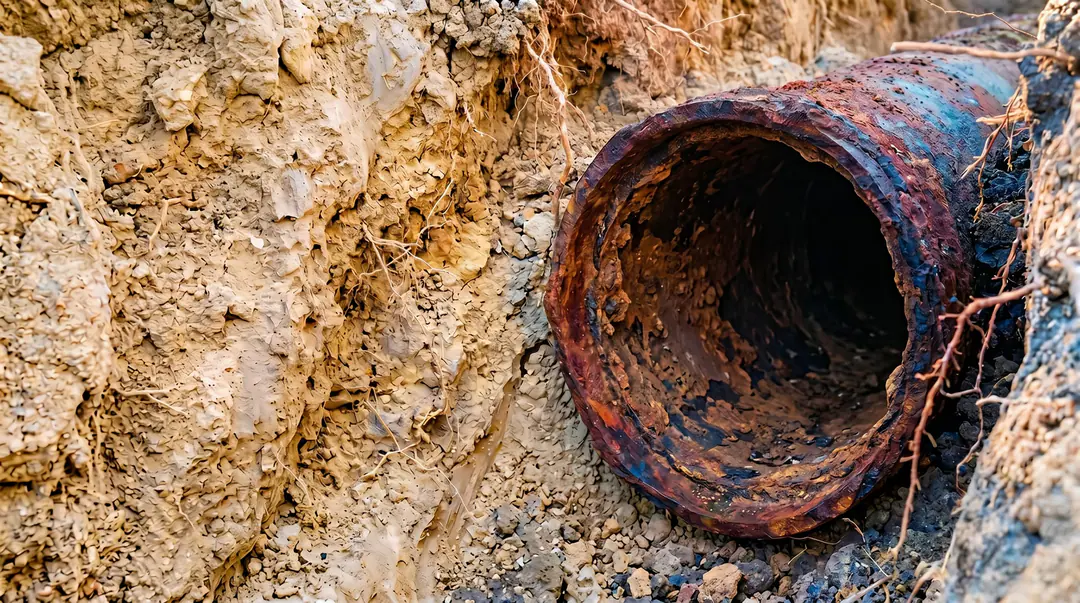
Slide across each pipe to see it before and after we line it.
Each picture pairs a damaged pipe with the same pipe after lining. Our camera recording shows you which of these problems is inside your sewer.


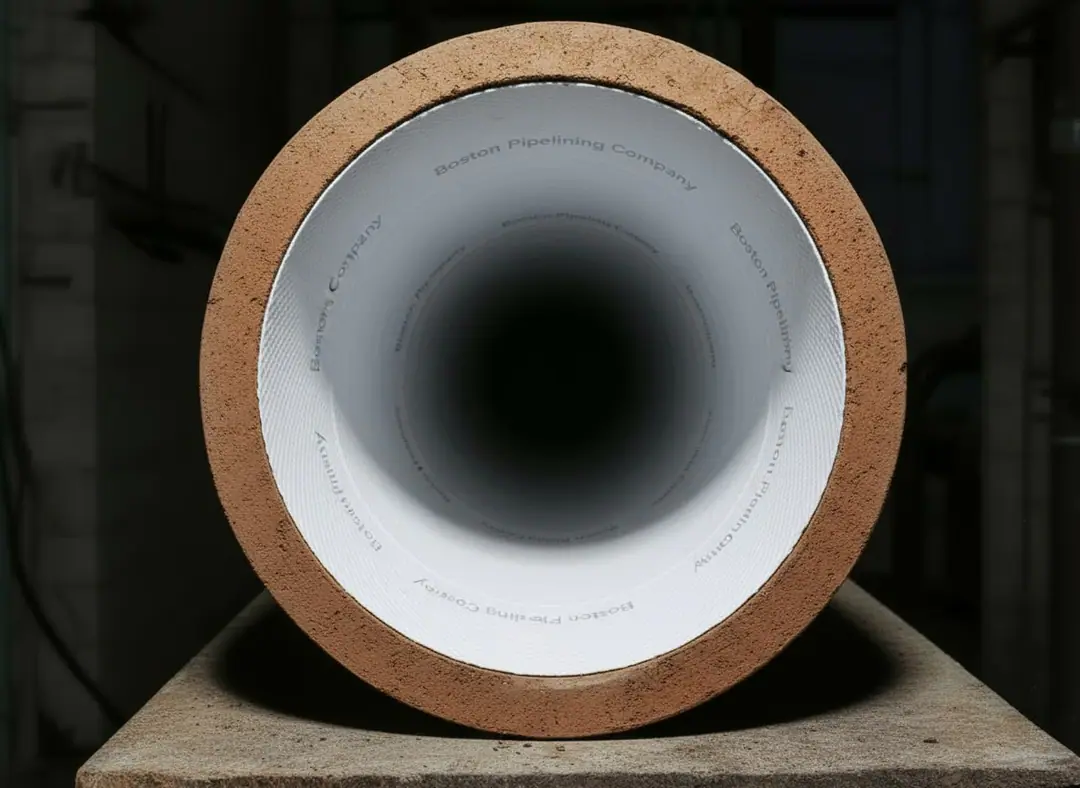
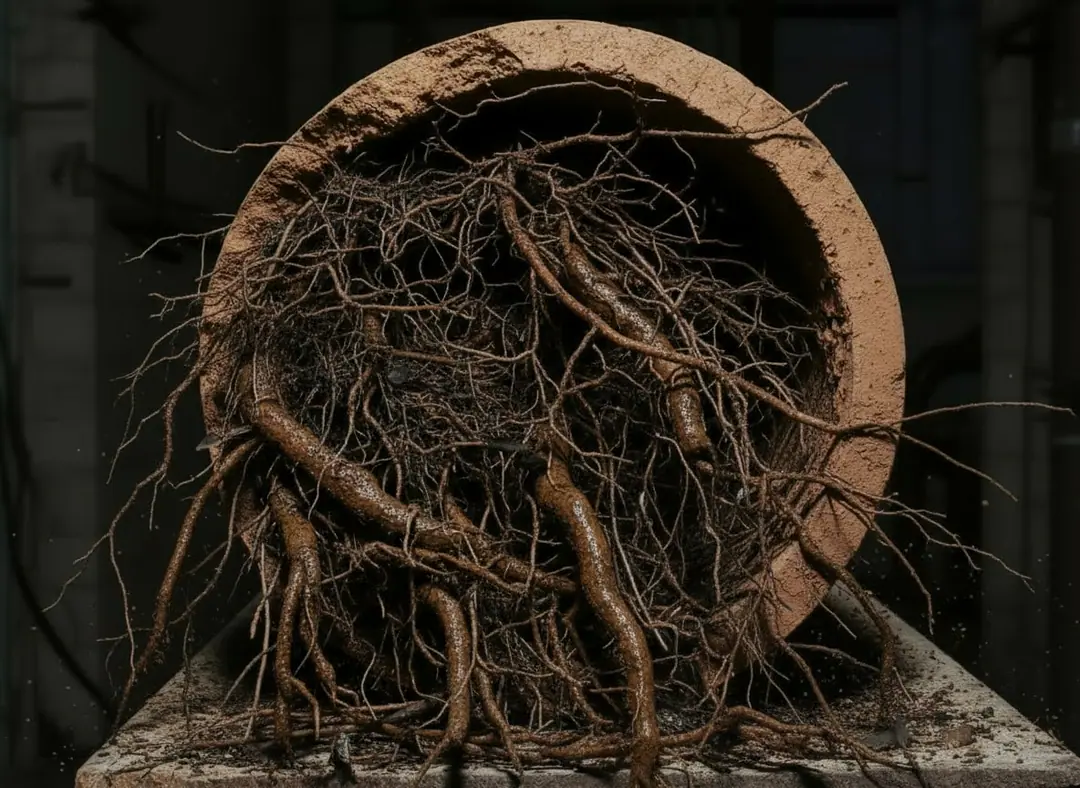
We clear a root mass and line the pipe it filled.We cut and jet the roots out of your sewer before we line it. The cured liner covers the joints along the lined run where those roots grew in. 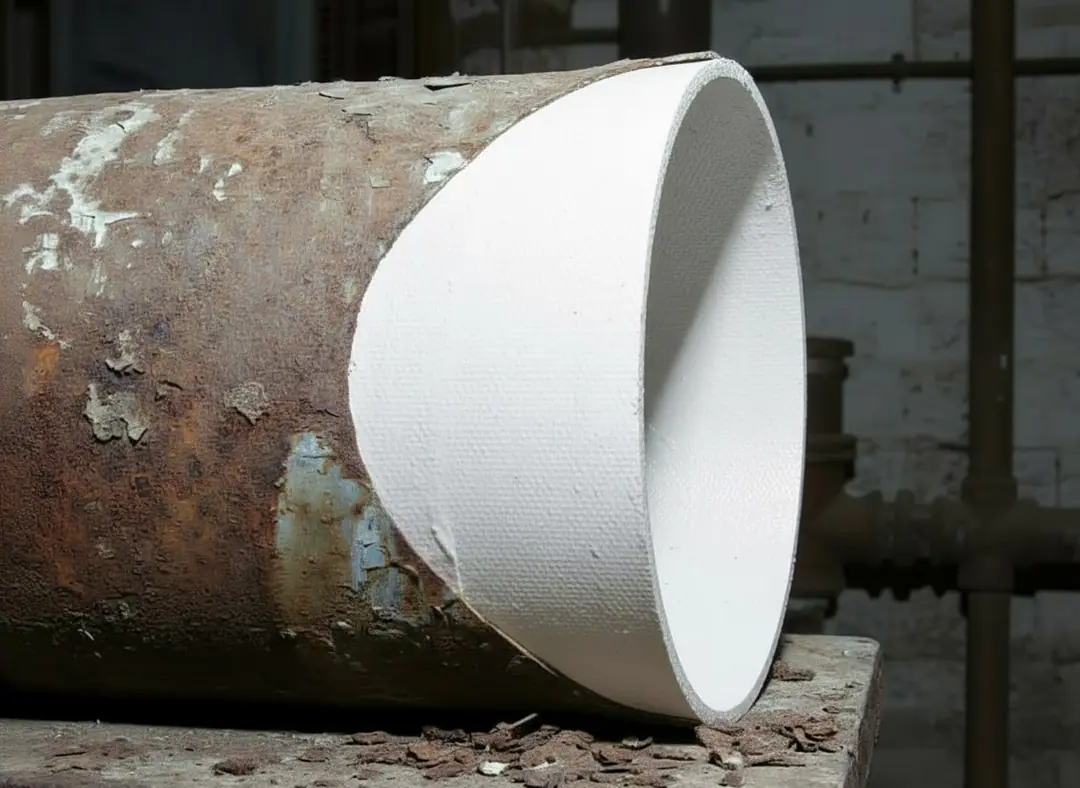
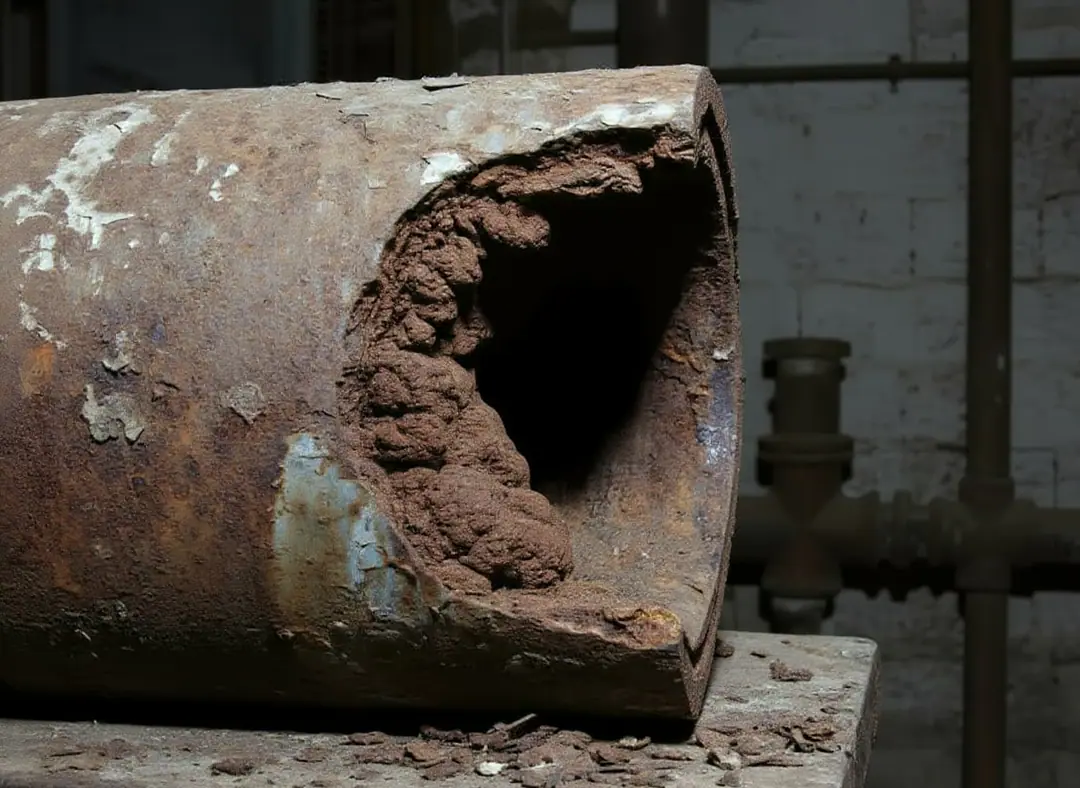
Our liner covers the corrosion inside your cast iron drain.Rust and scale flake off inside cast iron and narrow it. We descale your pipe back to its wall, then line it so your drain flows over a smooth new surface. 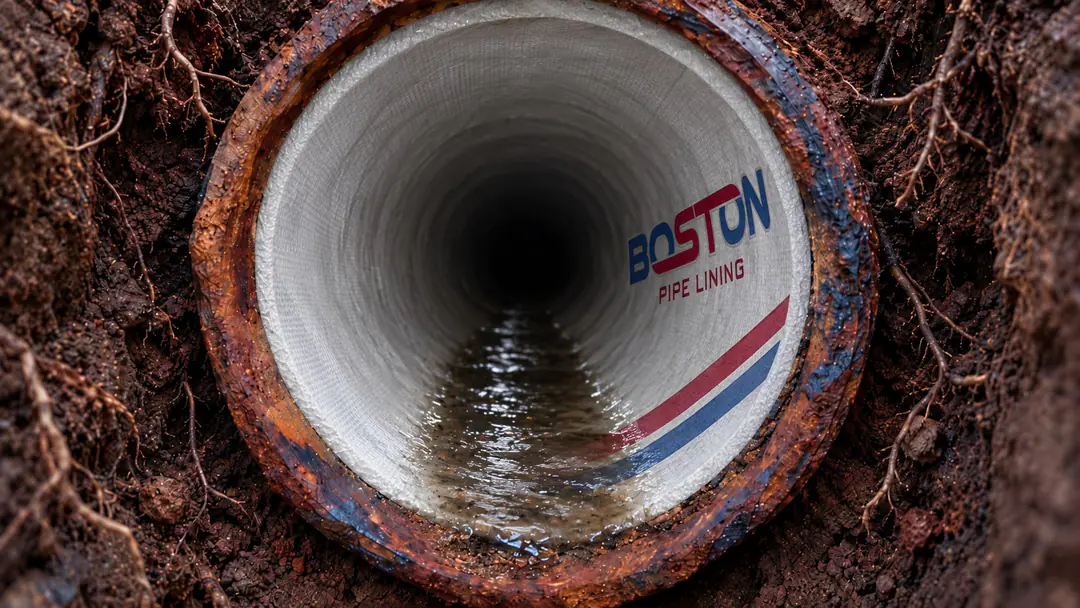
We line scaled cast iron where it runs under your yard or slab.We reach a run like this from your cleanout or an access opening we agree on with you, instead of digging along its route. 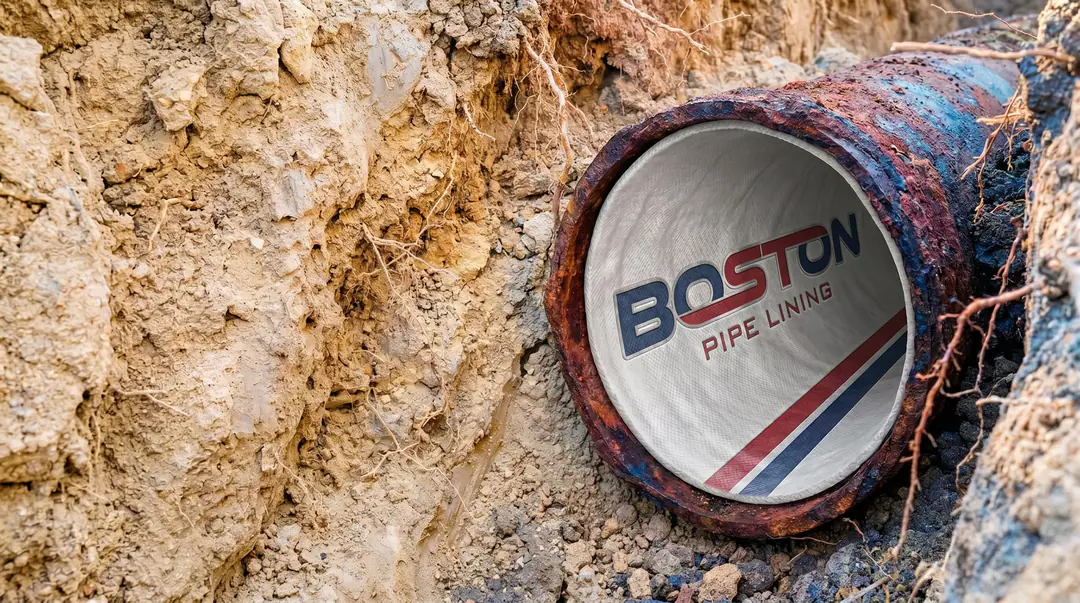
We renew your lateral inside the pipe that is already in the ground.Your liner cures against the old pipe wall and becomes a new pipe inside it. If our camera shows a section that has lost its shape, we repair that spot before we line the rest.


We line these problems inside your sewer.
Lining needs a pipe that still holds its shape. Our camera recording shows us whether yours does and which of these problems it has.
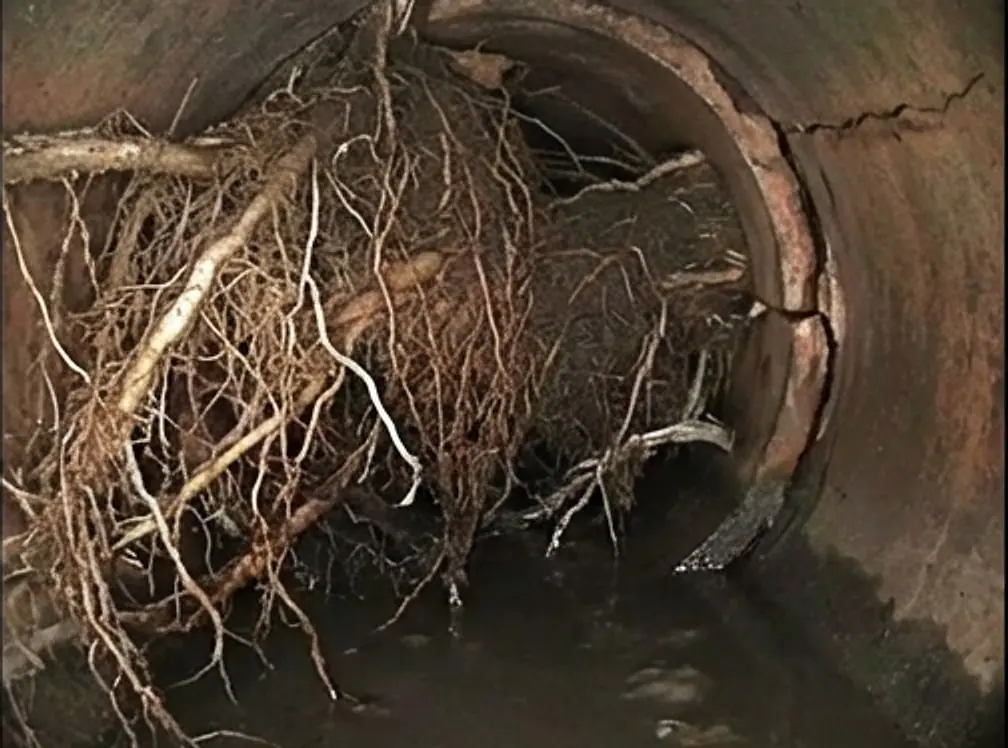
Roots are growing into your sewer at its joints.
Roots catch paper and grease until your drains slow or back up. We cut and clean them out, then line the run so its joints are covered.
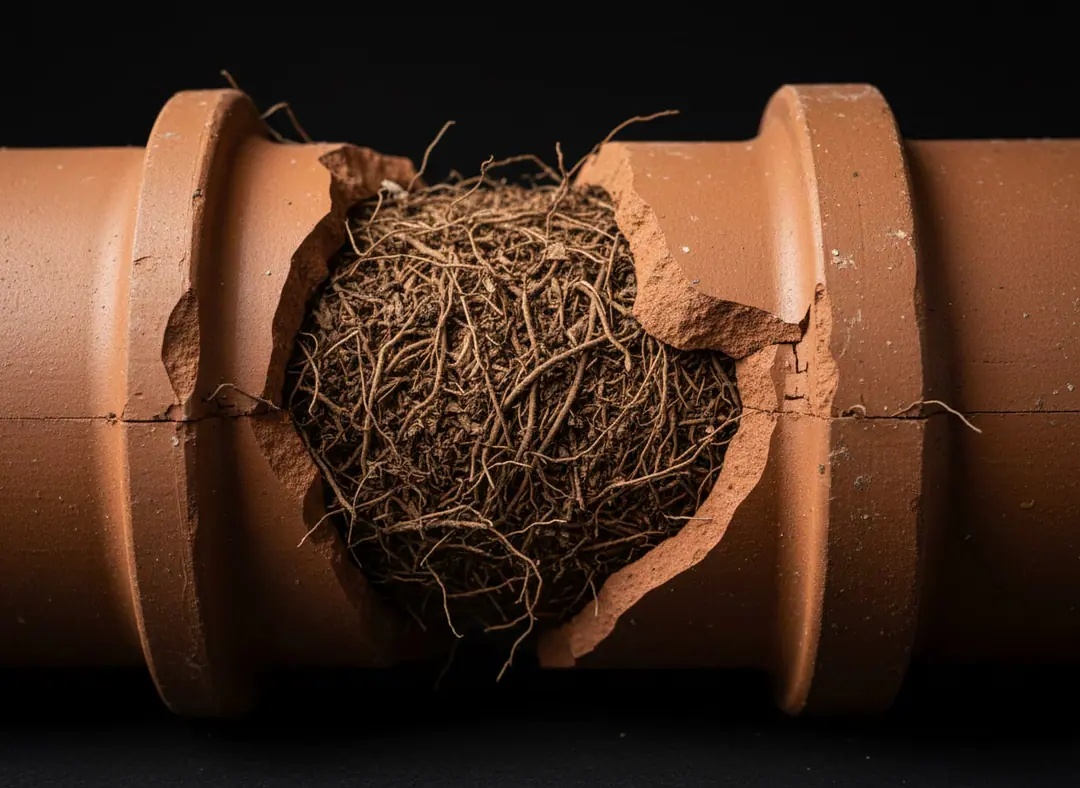
Your clay pipe has cracked or broken at a hub.
Cracks and broken hubs let roots and soil into your sewer and let wastewater out. Our liner spans the break with a continuous new wall when the pipe around it still holds its shape.
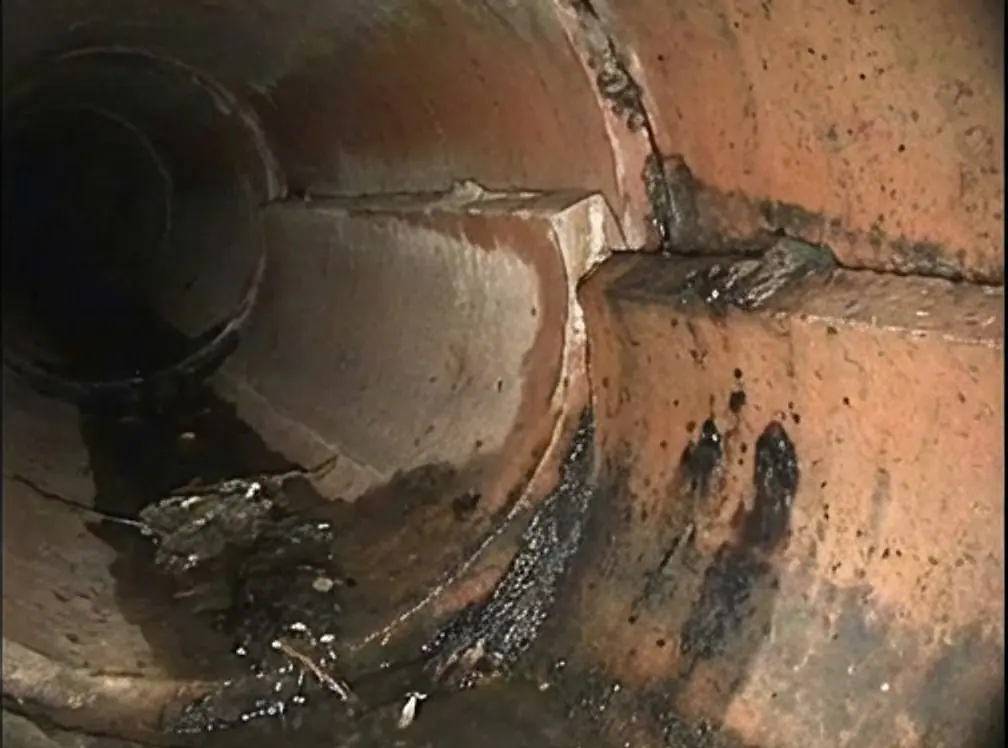
A joint in your sewer has shifted out of line.
An offset joint leaves a lip that catches waste. Our liner bridges an offset our camera shows it can pass; a joint that has shifted further needs a spot repair before we line the run.
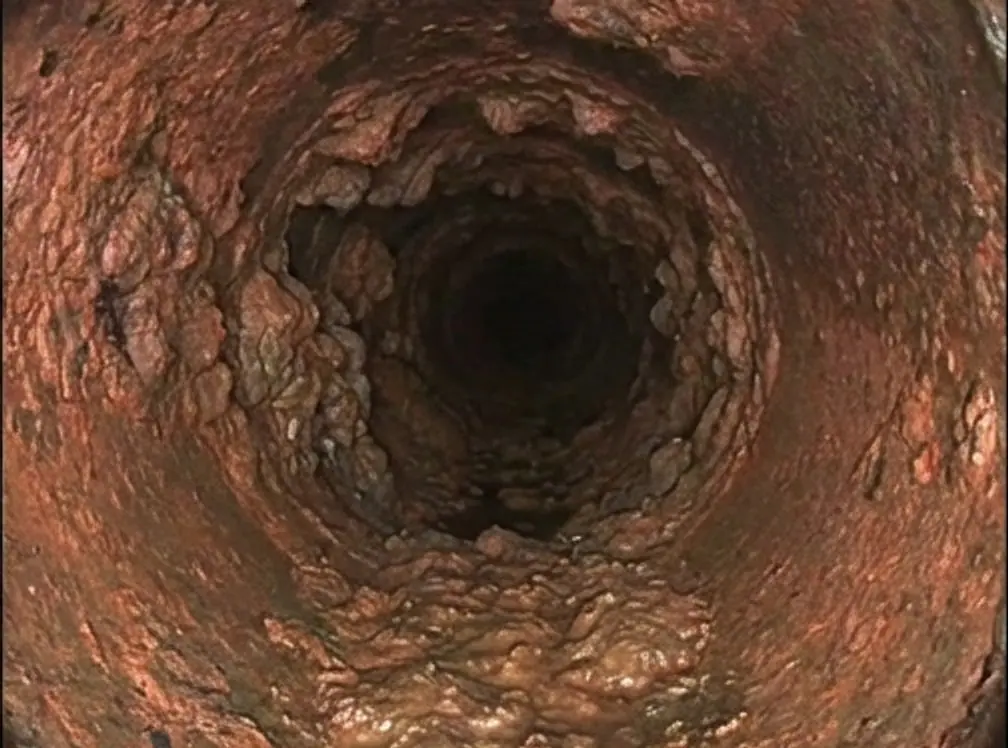
Rust and scale are closing in on your cast iron drain.
Scale narrows your pipe and snags waste until it clogs. We descale the inside back to the pipe wall, then line it with a smooth new surface.
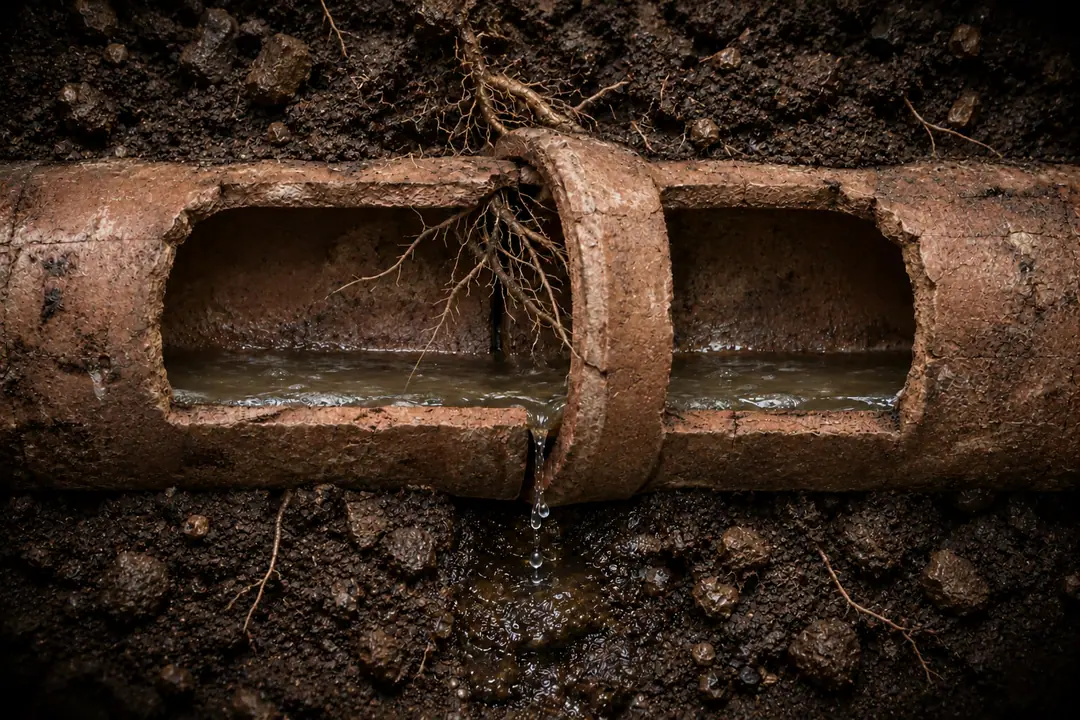
Your sewer is leaking at a joint into the soil around it.
A leaking joint washes out the soil under your pipe and draws roots toward the water. Our liner covers the leaking joints along the lined run with a continuous new wall.
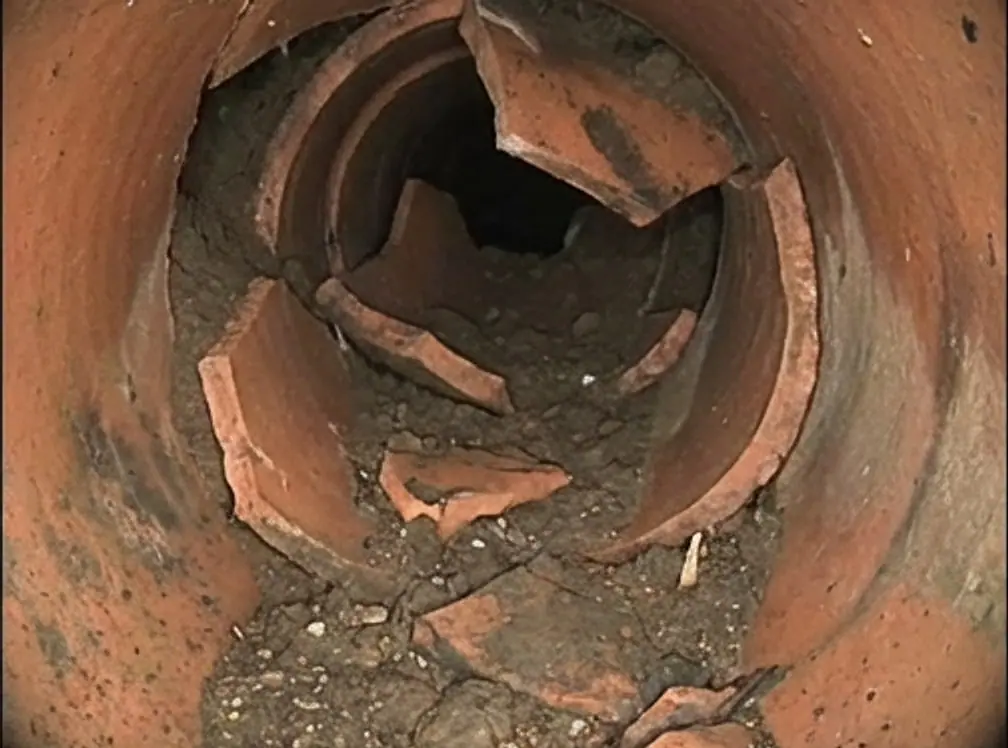
Part of your sewer has collapsed.
Our liner follows your existing pipe, so it cannot pass through a section that has caved in. We repair the collapsed spot first, then line the sections on either side when they still hold their shape.


We line your sewer in five steps.
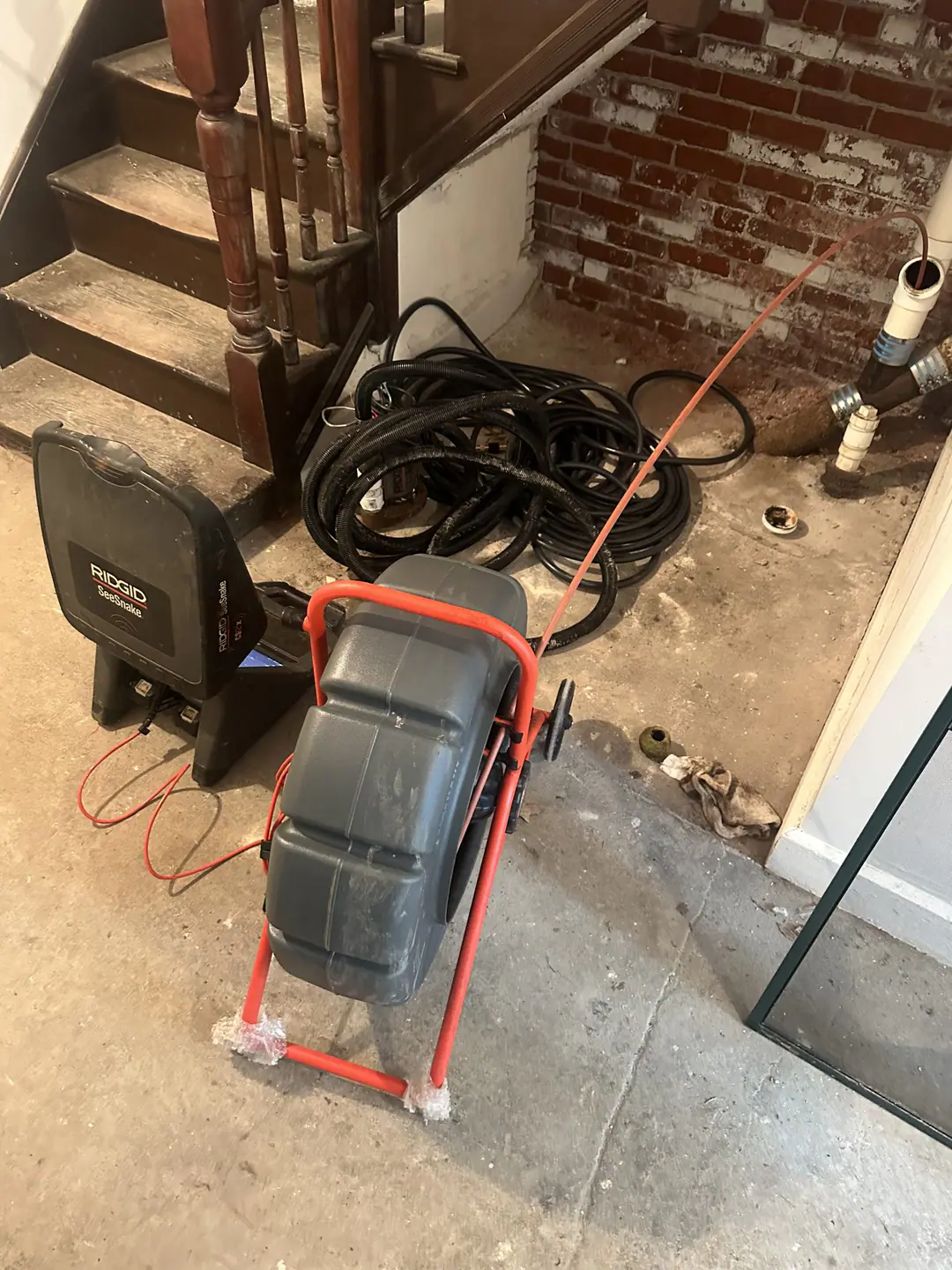
We record your sewer with our camera.
We run our camera through your cleanout to find roots, scale, cracks and offsets. We measure the length and diameter of each section and confirm where we can reach it.
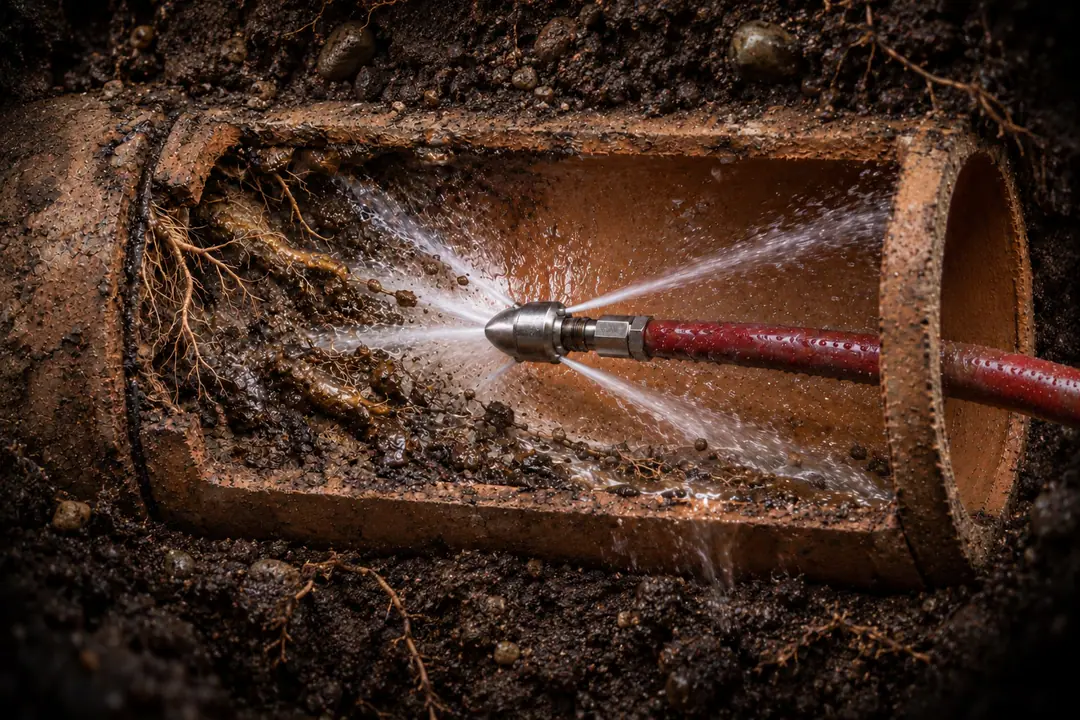
We clean your pipe back to its wall.
We jet and cut out roots, grease and scale so nothing blocks our camera, our measurements or your liner.
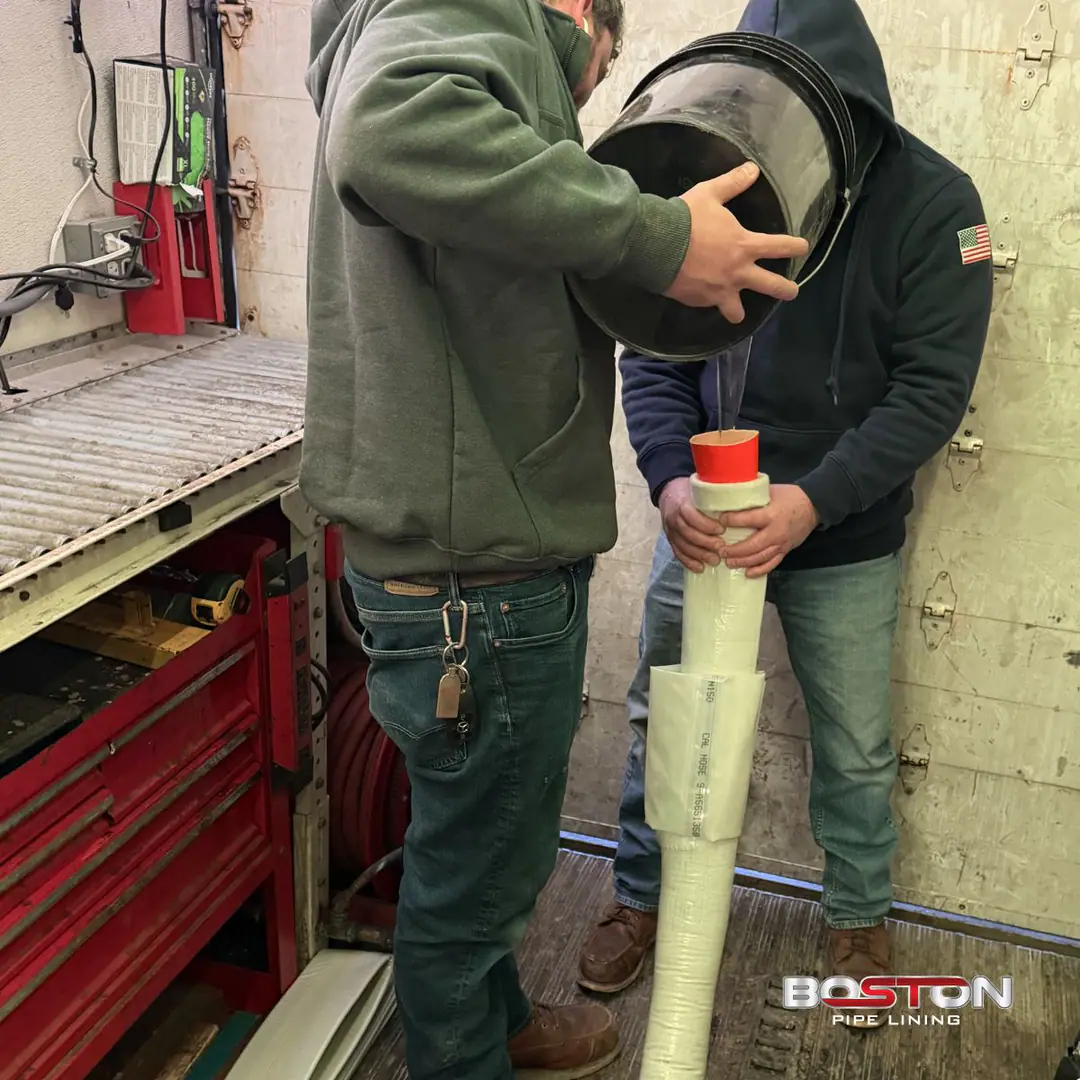
We prepare your liner and install it.
We saturate a liner cut to your measured run with resin, then invert it from your access point so it presses against your old pipe wall.
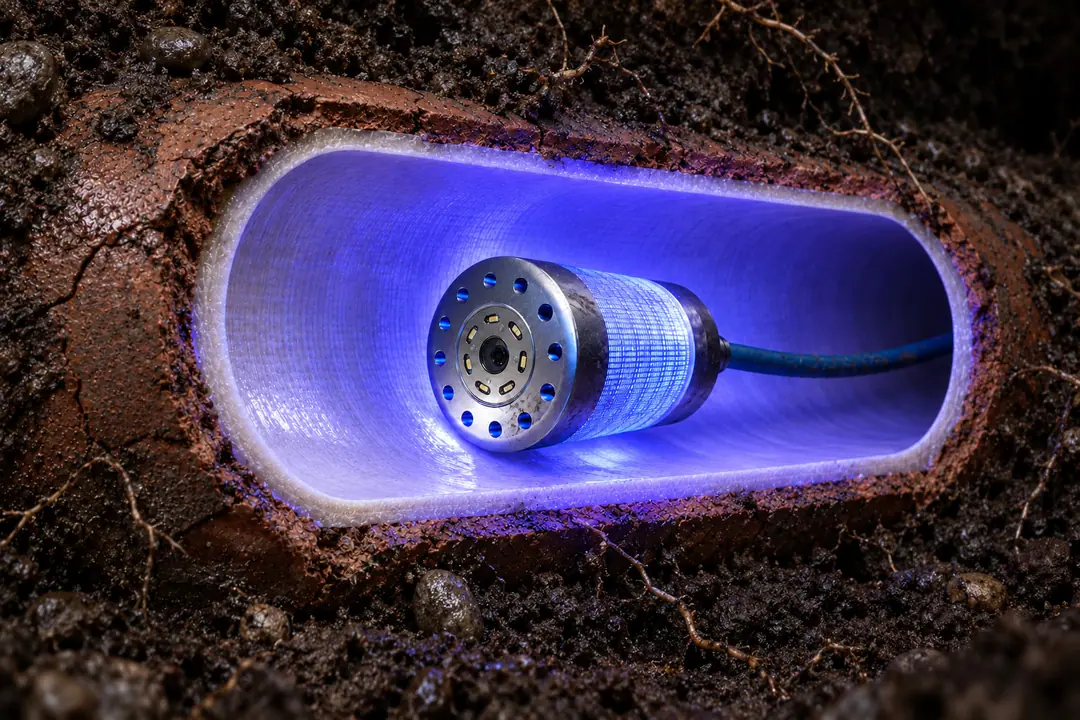
We cure the liner into a new pipe wall.
We cure the resin into a solid wall inside your old pipe using the cure method specified for the liner system. On suitable Boston jobs, we draw a UV light head through the installed liner to cure it.
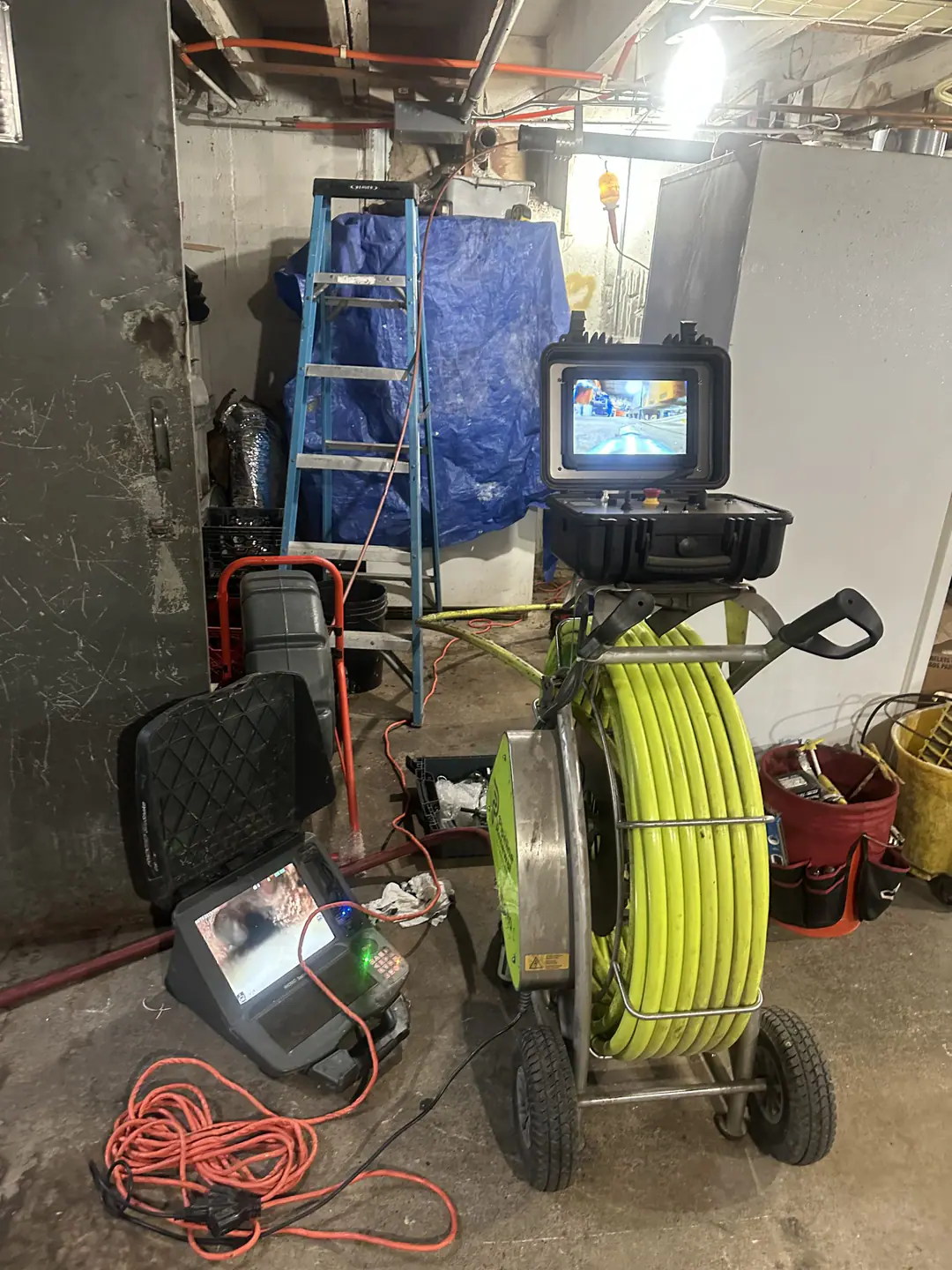
We record your sewer again before you use it.
We reopen any branch connections covered by the liner and record the lined run with our camera, so you see the finished repair before your fixtures go back into use.


Footage from our jobs
This is how we set up a lining job on site.
Our vans carry the inspection and lining equipment, and our hose runs into your building through the access we plan with you.
We walk from our service vans past the inspection and lining equipment to the basement window where our hose enters the house. We published this clip with our Back Bay project article.
We plan your access and water use before we install your liner.
Our equipment, hoses and their route into your building need space as well as the access point. If your sewer runs below a finished basement, we can sometimes line it through a cleanout; another layout may need a floor opening. We review those locations with you before installation so our plan accounts for the rooms around your pipe.
The fixtures that drain into the section we are lining cannot be used during installation and cure. Tell us which kitchens, bathrooms or occupied units share your sewer. We tell you which fixtures are affected and when they can be used again with the liner system we select, so you can coordinate with your residents or staff.
We cure your liner with ultraviolet light when your job suits it.
On suitable jobs we position and inflate your liner, then cure its resin with ultraviolet light from our SpeedyLight+ UV system. We time the cure to the length and diameter of your pipe instead of a generic schedule.
In Jamaica Plain we cured a 6-inch liner this way beneath a finished basement, working from inside the home. Our camera recording and your access decide which liner system and cure method we select for your sewer.
We line your sewer lateral from inside your building.
Your lateral is the pipe that carries wastewater from your building toward the main. We line 4-inch and 6-inch laterals in cast iron and clay when our camera shows they still hold their shape, and we reinstate their connections after the liner cures.
In Back Bay we lined a cast iron lateral with recurring backups beneath a finished floor, staging our equipment inside the property. If your lateral runs under finished space, we plan the access opening with you before we install.
We line building sewers for property managers and commercial owners.
If your building sewer serves several units, a restaurant or offices, we plan the lining around your occupants. We tell you which units and fixtures go out of use during installation and cure, and we schedule the work with you.
In South Boston we lined corroded 4-inch and 6-inch cast iron lines serving a building from inside it, without a full-length excavation of its concrete floor.

We lined a Charlestown sewer across a change in pipe size.
In Charlestown we lined a 4-inch lateral that transitioned to a 6-inch main beneath a finished basement. Our camera showed scale and cracking at the hub. After jetting, we installed a continuous liner across the transition using interior access for the inversion drum.
We also brush coated the smaller branches in that building, where their condition and diameter suited a coating.
Floor access allowed the inversion drum to tie into the sewer without opening the entire slab along the run.
We have set up our lining equipment in these Boston homes.
Read how we lined laterals and building sewers in Boston.
- UV-cured lining in Jamaica PlainWe cured a 6-inch liner with ultraviolet light beneath a finished basement.
- Cast iron lateral lining in Back BayWe lined a Back Bay owner's cast iron lateral beneath a finished floor.
- Cast iron building sewer lining in South BostonWe lined 4-inch and 6-inch cast iron lines from inside the building.
- Lining 4-inch sewer laterals in BostonRead how we map, clean and line a long 4-inch lateral.
Compare lining with coating and cleaning.
We answer your questions about trenchless lining.
Is UV curing faster?
UV curing is one cure method we use on suitable jobs. Its timing depends on your pipe's length, diameter and access and on the liner system we select for your sewer.
Can roots come back after lining?
Our liner covers the joints along the lined run, where roots can enter. Roots pressing from outside your pipe can still need maintenance on some properties. Our camera recording shows whether lining covers the sections where roots are entering your sewer.
Will you need to open my basement floor?
We use your existing cleanouts when they give us the access we need. When we need an opening for our equipment, we agree its location and size with you before work so you can plan around it.
Can lining repair a collapsed pipe or a low spot?
Our liner follows your existing pipe route. It does not lift a low section or recreate a path through a complete collapse. If our camera finds either, your sewer may need a targeted repair or replacement there before we line the rest of the run.
What affects the scope and price of my lining job?
The length and diameter of your repair, the cleaning it needs, its bends and connections, the access openings and the fixtures we need to coordinate each affect the job. Your camera recording and a look at your available access give us the information we need to discuss your sewer.
Can you line part of my sewer and coat its branches?
Yes. Your main run and its smaller branches may need different repairs. We inspect each section so your liner, coatings and connections work together as one drainage system.
We do this work in these Boston neighborhoods and South Shore towns.
- Boston sewer repair
- Dorchester sewer repair
- Roxbury sewer repair
- West Roxbury sewer repair
- Milton sewer repair
- Quincy sewer repair
- Braintree sewer repair
- Randolph sewer repair
- Weymouth sewer repair
- Hingham sewer repair
- Cohasset sewer repair
- Scituate sewer repair
- Norwell sewer repair
- Rockland sewer repair
- Marshfield sewer repair
- Back Bay sewer repair
- Charlestown sewer repair
- South Boston sewer repair
- Jamaica Plain sewer repair
- All our service areas